
Dry Needling in Chichester
Dry Needling is a treatment technique used by appropriately trained physiotherapists to help reduce muscular tension, relieve pain and improve movement.
At Chichester Physio in Bosham, Dry Needling may be used as part of your physiotherapy treatment when your therapist feels it is appropriate for your condition. It is normally combined with other treatments such as hands-on therapy, movement advice and rehabilitation rather than being used as a treatment in isolation.
Frequently Asked Questions
What Is Dry Needling ?
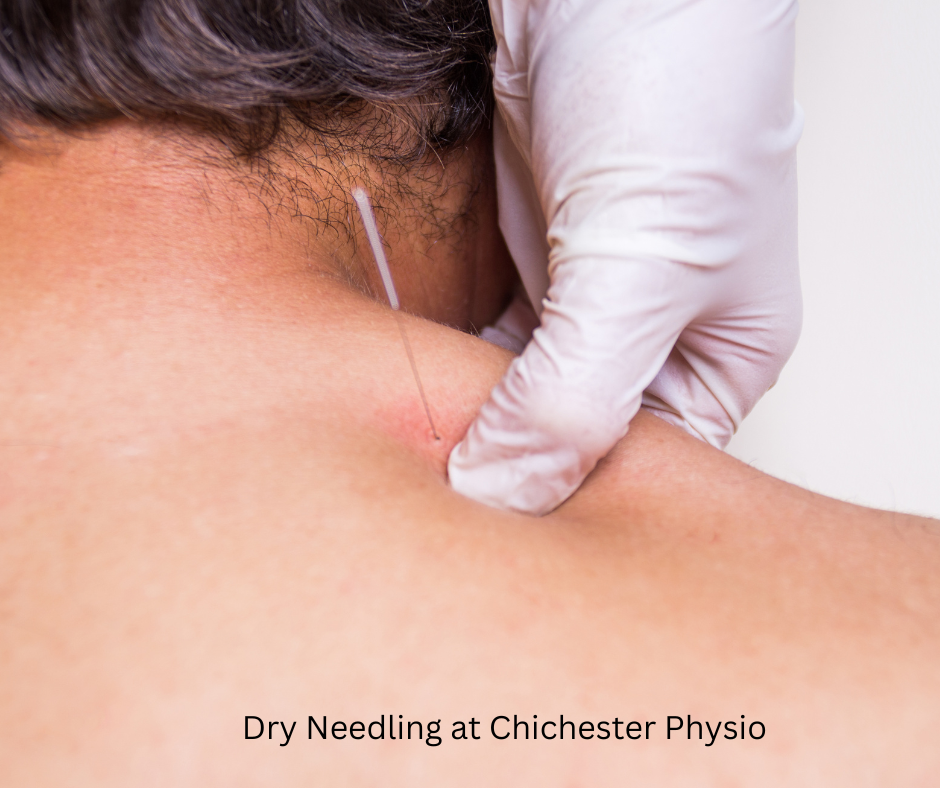
Dry Needling involves inserting very fine, sterile, single-use needles into specific areas of muscle and soft tissue.
The aim is to target tight or sensitive areas within the muscle, sometimes referred to as trigger points, which may contribute to pain, stiffness or restricted movement.
Although Dry Needling uses similar needles to acupuncture, the two treatments are different. Dry Needling is based primarily on modern Western anatomical and neurophysiological principles and is commonly used within musculoskeletal physiotherapy.
What Can Dry Needling Help With?
Dry Needling may be considered for a variety of musculoskeletal problems, particularly where muscle tightness or sensitivity is contributing to symptoms.
This can include:
- Neck and shoulder tension
- Lower back pain
- Tight or painful muscles
- Sports-related muscular problems
- Restricted movement
- Muscle trigger points
- Some tendon and overuse conditions
- Muscle tightness following injury
Your physiotherapist will assess you first to decide whether Dry Needling is appropriate and whether it is likely to form a useful part of your treatment.
What Happens During Dry Needling?
Your physiotherapist will first identify the muscles or areas contributing to your symptoms.
A very fine sterile needle is then inserted into the targeted muscle. You may feel very little as the needle enters the skin, although some people experience a brief twitch, ache or cramping sensation when the muscle is treated.
The needles may be removed almost immediately or left in place briefly depending on the technique being used.
Treatment is tailored to you and can be stopped at any time if you are uncomfortable
Does Dry Needling Hurt?
Most people tolerate Dry Needling very well.
You may feel a brief twitch or aching sensation when a tight part of the muscle is reached. Some people also experience temporary muscular soreness afterwards, rather like the feeling after exercise or a deep tissue massage.
Your physiotherapist will explain what to expect before treatment begins.
Dry Needling or Acupuncture – What's the Difference?
Although both treatments use very fine needles, Dry Needling and acupuncture are not the same treatment.
Traditional acupuncture originates from Chinese medicine and may involve placing needles along recognised acupuncture points or meridians.
Dry Needling is generally used within Western musculoskeletal medicine and physiotherapy. The needles are placed according to the anatomy of the muscles and tissues being treated, with the aim of influencing pain, muscle tension and movement.
At Chichester Physio, Dry Needling is used when clinically appropriate as part of an overall physiotherapy treatment plan.
Is Dry Needling Safe?
When performed by an appropriately trained healthcare professional, Dry Needling is generally considered a safe treatment.
We use sterile, single-use needles and your physiotherapist will discuss your medical history and any relevant precautions before treatment.
Dry Needling will not be suitable for every patient, which is why we always assess you before recommending treatment.
e Content
Why Have Dry Needling at Chichester Physio?
At Chichester Physio, we don’t simply treat the area that hurts.
Your physiotherapist will assess your symptoms, movement and the possible reasons behind your problem before deciding which treatments are most appropriate.
Dry Needling may then be combined with hands-on physiotherapy, advice and rehabilitation to help address both your symptoms and the underlying factors contributing to them.
Our aim is simple: